Song DNA
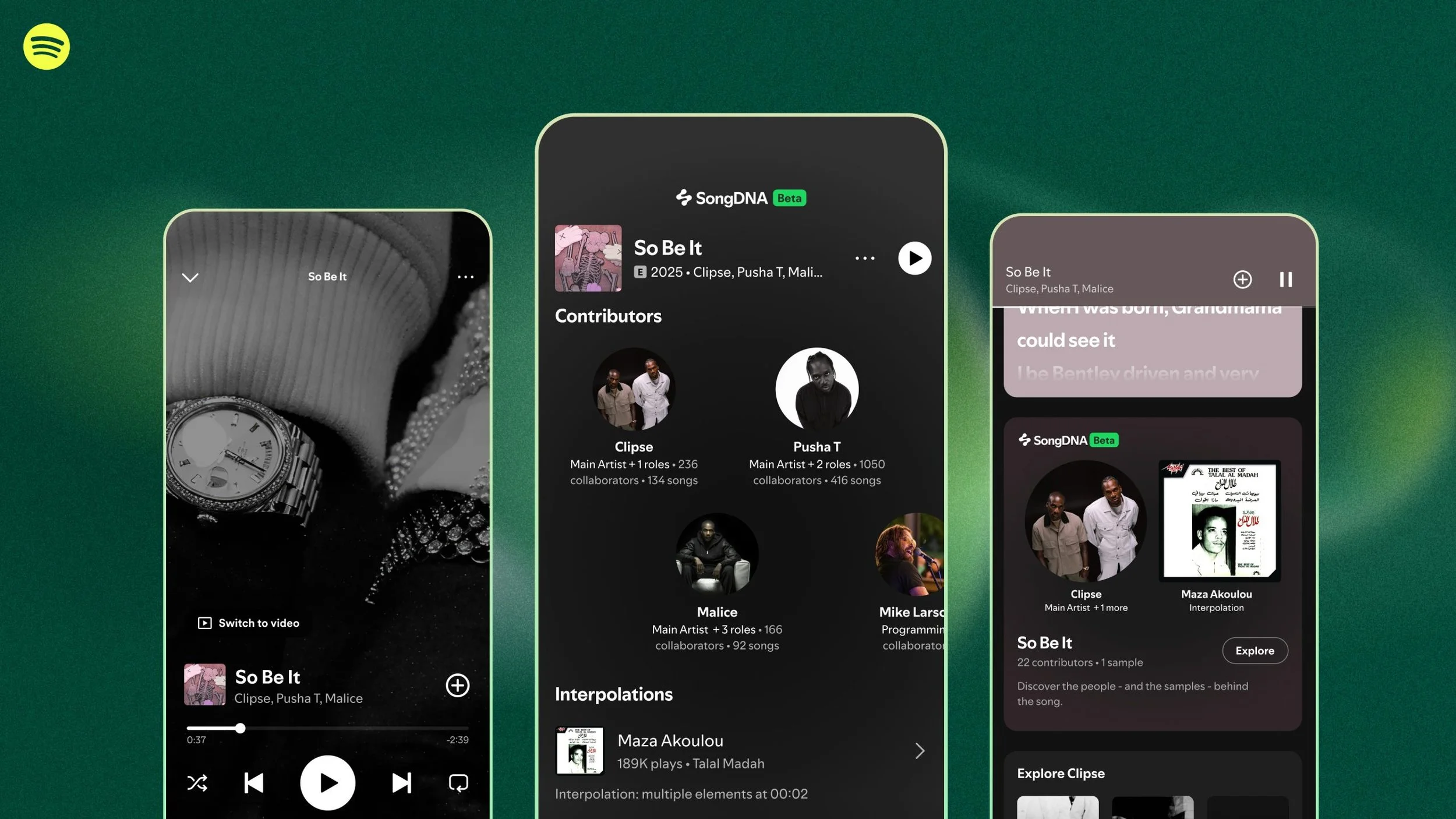
A little while ago, I was playing Spotify the way I often do: in the living room with my daughters around, picking a song I assume they will like and letting a playlist of sorts unfold from there. A couple of songs in, a cover started playing: I don’t remember exactly what song it was, but it must have been a pretty mainstream pop song for my daughters to be listening to it — they’re 5 and 18 months old.
As I was scrambling to remember who the song’s original performer was, I went to check the credits, which usually gives you a clue. Instead I found a section entitled “SongDNA” with information about the samples used and things of the sort. This was an interesting moment: first off, I did find the information I was looking. Second, it felt a bit overwhelming because, over a decade ago, I launched a music startup project that aimed to do just that (it’s now gone but the blog is still live, FYI).
Our idea was to effectively set up the equivalent of IMDB for music, i.e. a database of music-related information that would help you anytime you were wondering who wrote, covered, sampled, produced, a particular song or album. Who played with whom; who inspired who; what funny anecdotes stemmed from an infamous alcohol-infused meeting at Chateau Marmont (more than one). The goal was obviously to provide a service to mild-to-hardcore music aficionados and, beyond, help promote music as an art form through information. Because I contend music stands to gain more visibility in this day and age: I love stand-up, but this is different.
Long story short, we did launch our website during covid and had it running for a couple of years — all 20+ million pages of it. And we did reach about 10 000 monthly visitors, which was not too shabby but not truly monetizable either. And servers don’t come free, hence the fact that we eventually shut it down. But our core belief was that people would welcome additional information surrounding the sheer piece of music. Spotify has long provided every imaginable track, but little more: in terms of contextual data, you couldn’t find much.
Until now. In a way, this confirms our initial thinking. Also, this underlines the fact you can more easily implement such projects when you already have a massive platform… In any event, well done Spotify, that’s a good idea :)