And then there were four…
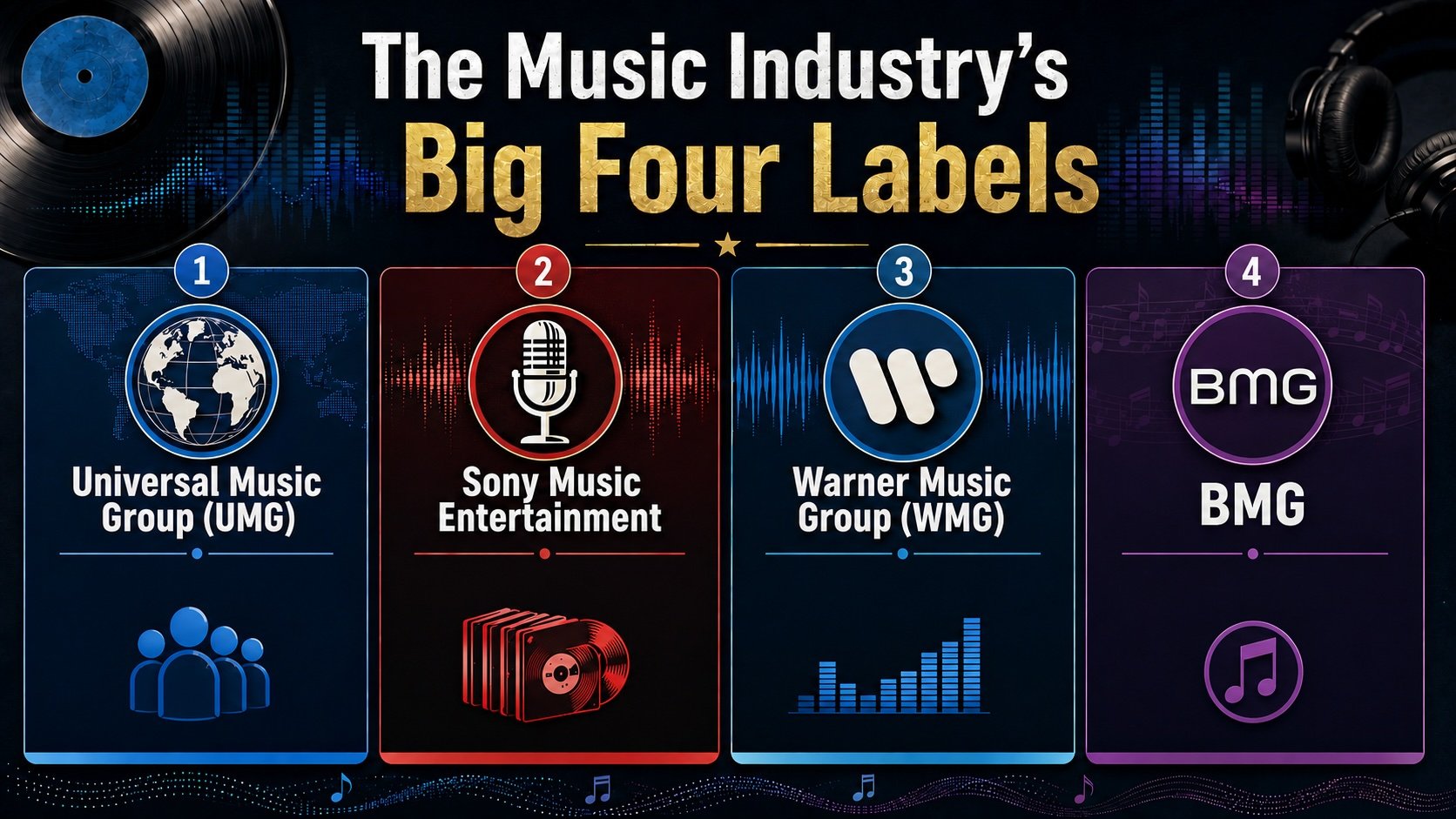
For the better part of my time observing the music industry, 4 major labels effectively split the proverbial cake: Universal, EMI, Sony and Warner. Then, in 2012, EMI got swallowed up by Universal, creating a veritable monster, one that united the Beatles and the Stones no less.
And then there were three… until now.
For many years, the fourth place contender in this not-so-little war was Bertelsmann, although it was arguably smaller than its counterparts. But now, the German multinational is joining forces with Concord, a company that specializes in catalog acquisition and management. In other words, a business-first approach to music that has become increasingly strategic in the streaming era, where volume counts a great deal and hits can make a comeback and generate further revenue at any given time, as evidenced by Kate Bush’s surprise resurgence thanks to the seminal show Stranger Things, or more recently the Michael biopic which gave yet another boost to Jackson’s catalog, all the while becoming the most successful music biopic of all time as it surpassed Bohemian Rhapsody. It is what it is.
The point is, having a fourth major player in the mix means that there will be increased competition on the overall music market. Which is just as well, because Universal’s domination as of late has been such that Trump would salivate over it if only he knew anything about music apart from “YMCA”, famously the straightest anthem ever released. Sony has major stars: Bad Bunny, Beyoncé, Harry Styles… Warner has major stars: Ed Sheeran, Bruno Mars, Dua Lipa… But Universal has everybody else: Taylor Swift and Drake, The Weeknd and Billie Eilish, Morgan Wallen and Olivia Rodrigo, the aforementioned Beatles and Stones… the list is downright silly.
All told, Universal Music Group (UMG) accounts for about a third of all music — worldwide. By comparison, the new BMG / Concord group would represent a little over 5%. So there you have it: music today constitutes an incredibly concentrated market, where non-majors account for less than 25% of the entire industry. While it has arguably never been easier to produce and release music, making oneself noticed in this environment is the challenge. Which is why having a little shake-up, no matter how small, is worth noting.
We’ll have to talk about the actual indie industry another time though…